
Why Rig Capacity Matters on Larger Horizontal Directional Drilling Projects
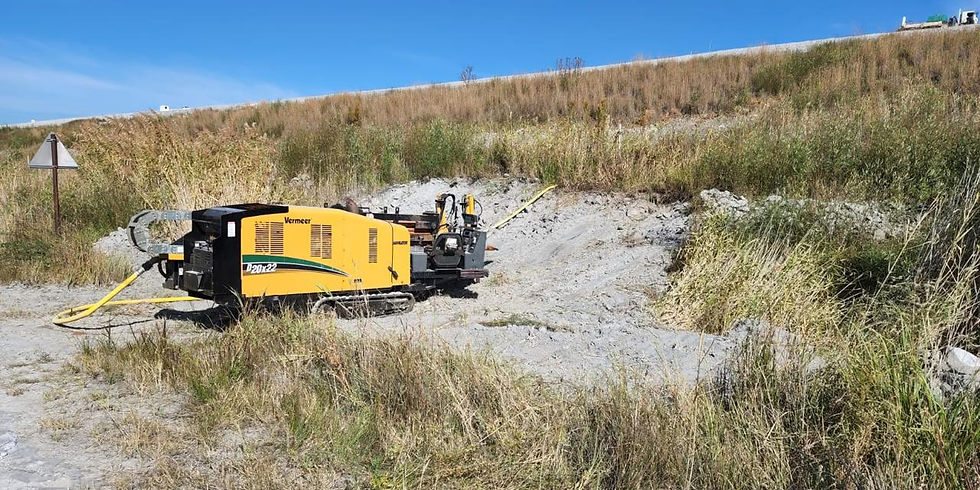
Not all horizontal directional drilling projects are the same, and neither are HDD rigs. A short road crossing for a relatively small-diameter pipe may require very different equipment from a long bore carrying a large HDPE pipeline. As projects increase in length, diameter and complexity, the capacity of the drilling rig becomes increasingly important.

Using a rig that is appropriately sized for the project is not simply about having more power. It affects drilling performance, bore stability, reaming capacity, pullback capability and ultimately the ability to complete the installation successfully.
So, what exactly does rig capacity mean, and why does it matter on larger HDD projects?
HDD Rig Capacity Is More Than Just Machine Size
When people refer to the “size” or capacity of an HDD rig, they are usually talking about several performance characteristics. These can include:
Pullback force
Thrust force
Rotational torque
Drill rod capacity
Fluid or mud system capacity
Reaming capability
Each plays a role during different stages of the drilling process. The correct rig needs to provide enough capacity not only to drill the pilot bore, but also to enlarge the bore and safely pull the product pipe into position.
1. Longer Bores Require More Pullback Capacity
As bore length increases, so does the amount of resistance encountered during the installation.
The drill string travels further through the ground, and the pipe being installed must eventually be pulled through the entire bore path. Friction between the pipe, drilling fluid and surrounding formation can significantly increase the pulling force required.
A larger HDD rig generally provides greater pullback capacity, giving the drilling team more capability to manage these forces. Importantly, the rig's maximum pullback capacity is not necessarily the force that should be applied to the product pipe. Pipe material, diameter and allowable tensile load must also be considered when planning the installation.
2. Larger Pipe Diameters Need Larger Boreholes
The pilot bore is only the first stage of many HDD installations. Once the initial bore path has been completed, the hole may need to be enlarged using one or more reaming passes before the final pipe can be installed.
The larger the product pipe, the larger the required bore diameter — and the more demanding the reaming process becomes. Larger reamers can create considerably more resistance than smaller tooling. This means the rig needs sufficient torque and thrust or pullback capacity to rotate and move the tooling effectively through the ground.
3. Ground Conditions Can Increase the Load on the Rig
Bore length and pipe diameter are not the only factors that determine equipment requirements.
The geology along the bore path can dramatically influence the amount of force and torque required. Soft soils may behave very differently from dense clay, compacted material, gravel or rock formations.
Variable ground conditions can also make a bore particularly challenging, especially when the drill encounters different formations along the same alignment. Understanding the expected ground conditions helps the drilling contractor select suitable tooling, drilling fluids and rig capacity before work begins. Where ground conditions are uncertain, geotechnical information can play an important role in reducing project risk.
4. Torque Becomes Increasingly Important During Reaming
Pullback capacity often receives the most attention when comparing HDD rigs, but rotational torque is just as important. Torque determines the rig's ability to rotate the drill string and cutting tools. During reaming, particularly on larger-diameter installations or in difficult ground, the reamer may encounter significant resistance.
Without sufficient torque, progress can slow, or the rig may struggle to rotate the tooling effectively. This is why equipment selection should consider both pulling force and rotational capability rather than focusing on a single specification.
5. Larger Projects Require Adequate Drilling Fluid Capacity
Drilling fluid plays several important roles during horizontal directional drilling. Depending on the application, it can help to:
Stabilise the bore
Cool and lubricate drilling tools
Carry cuttings out of the bore
Reduce friction around the drill string and product pipe
Support the reaming and pullback process
As bore diameter and length increase, the volume of drilling fluid required can increase significantly. The drilling operation therefore needs more than an appropriately sized rig. Pumps, mixing systems, fluid storage and, on certain projects, recycling systems may also need to be sized for the expected bore conditions.
6. Larger Rigs Provide Greater Operating Capacity (Not a Substitute for Planning)
It can be tempting to assume that a larger HDD rig automatically makes a difficult bore easier.
That is not necessarily the case. A high-capacity rig cannot compensate for poor bore planning, unsuitable tooling, inadequate drilling fluid management or insufficient understanding of the ground conditions. Successful HDD projects depend on the complete drilling system working together. This includes:
Bore design
Equipment selection
Drill tooling
Reaming strategy
Drilling fluid management
Pipe specifications
Ground conditions
Operator experience
Rig capacity is one important part of that system.
7. An Undersized Rig Can Reduce the Operating Margin
Drilling equipment operating close to its maximum capability has less reserve capacity when unexpected conditions arise. Ground conditions may change. Reaming loads may be higher than anticipated. Friction during pullback may increase.
On larger or more complex installations, having appropriate operating capacity gives the drilling team greater ability to respond to these conditions without continuously operating the machine at its limit. The objective is not simply to select the biggest rig available. It is to select equipment with the appropriate capacity for the expected drilling loads and project conditions.
8. The Entire Project Needs to Be Considered Before Selecting the Rig
There is no single bore length or pipe diameter that automatically determines which HDD rig should be used. Equipment selection should take into account the complete project. Factors typically considered include:
Bore length
Bore depth
Product pipe diameter
Pipe material
Ground conditions
Required bore diameter
Expected reaming stages
Allowable pipe pull force
Drilling fluid requirements
Entry and exit angles
Available working space
Existing underground infrastructure
These factors help determine the thrust, pullback, torque and supporting equipment required for the installation.
Bigger Does Not Always Mean Better
A larger HDD rig can provide valuable additional capacity on demanding projects, but selecting equipment is about matching the machine to the job. Smaller rigs can be highly effective for shorter installations, smaller pipe diameters and projects where working space is restricted.
Larger rigs become important when bore length, pipe diameter, geology or installation forces increase.
The best equipment is therefore not necessarily the largest rig available; it is the rig that provides the right combination of capacity, control and capability for the specific project.
Planning a Larger HDD Installation?
Kayeworx Drilling provides horizontal directional drilling services for infrastructure, construction, industrial and mining applications.
For larger or more technically demanding HDD projects, factors such as bore length, pipe diameter, geology and required pullback capacity should be considered early in the planning process. Contact Kayeworx Drilling to discuss your project requirements and the equipment needed for your proposed installation.


Comments