
8 Situations Where Horizontal Directional Drilling Could Be the Better Option
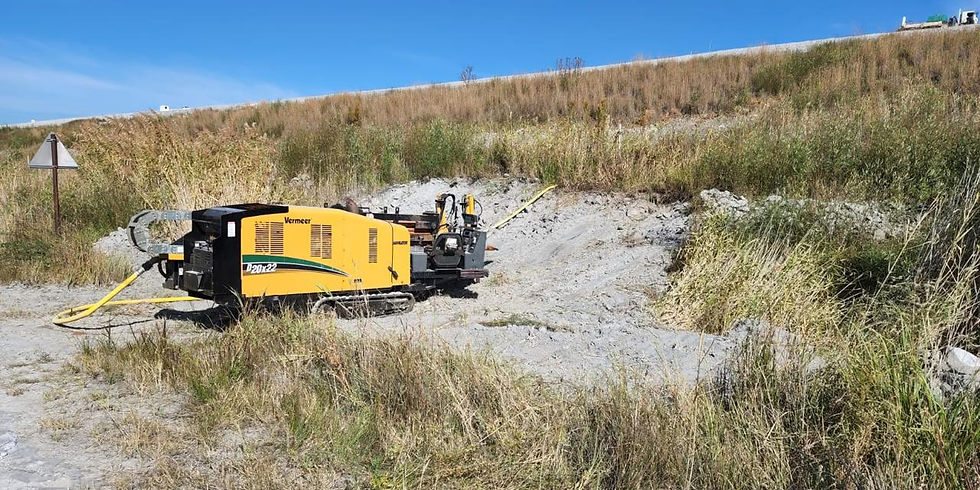
Horizontal Directional Drilling (HDD) is often considered when traditional open trenching is difficult, disruptive, or impractical. It allows underground pipes, conduits and services to be installed from the surface using a guided drilling method, with relatively small entry and exit areas instead of excavating a continuous trench.
That does not mean HDD is automatically the best solution for every project. Ground conditions, bore length, pipe diameter, existing infrastructure, access and project requirements all need to be considered. However, HDD can offer a significant advantage in certain situations. Here are eight examples.
1. When You Need to Cross a Road
Road crossings are one of the most common applications for horizontal directional drilling.
Traditional trenching may require sections of road to be excavated, traffic diverted and the road surface reinstated once the installation is complete.
With HDD, the bore can often be completed beneath the roadway while traffic continues above.
This can reduce disruption to motorists, limit damage to the road surface and reduce the amount of reinstatement required after the installation.
For busy roads, industrial sites or areas where access needs to remain open, this can be particularly valuable.
2. When You Need to Cross a River, Stream or Drainage Area
Installing pipelines or services beneath rivers and waterways can be challenging using conventional excavation methods. HDD allows the bore path to travel beneath the watercourse, avoiding the need to excavate directly through the riverbed.
Depending on the project and environmental requirements, this can help reduce disturbance to the surrounding environment and limit the amount of rehabilitation required. Detailed planning remains important, particularly where environmental approvals, groundwater conditions or difficult geology are involved.
3. When Existing Infrastructure Makes Excavation Difficult
Urban and industrial environments can contain a complex network of underground services.
Water pipes, sewer lines, electrical cables, fibre networks and other infrastructure can make open excavation difficult and increase the risk of damaging existing services.
Horizontal directional drilling provides greater flexibility in designing a bore path that passes beneath or around known infrastructure. Accurate service detection and bore planning are essential, but HDD can provide an effective installation option where available underground space is limited.
4. When Surface Disruption Needs to Be Minimised
Sometimes the biggest challenge is not the underground installation itself, but what sits above it.
Landscaped areas, paved surfaces, parking areas, driveways, business entrances and established infrastructure can be expensive or inconvenient to disturb.
Because HDD requires only limited excavation at the entry and exit points, much of the existing surface can remain intact.
This can reduce reinstatement work and help preserve infrastructure that would otherwise need to be removed and rebuilt.
5. When Access Must Remain Open
Construction work can have a major impact on businesses, residential developments, industrial facilities and public spaces if access routes are blocked. Open trenches may restrict vehicle or pedestrian movement for extended periods.
HDD can allow installations to take place underneath access roads, entrances and operating areas without creating a continuous open excavation. This can be particularly useful on active construction sites, factories, mines, commercial properties and logistics facilities where operations need to continue during the installation.
6. When Installing Utilities Over Longer Distances
For suitable projects, HDD can be used to install underground services over considerable distances without repeatedly opening and closing trenches along the route. Applications may include:
Water pipelines
HDPE pipelines
Electrical conduits
Fibre-optic ducting
Sewer or utility infrastructure
Industrial pipelines
The feasibility of the bore will depend on factors such as pipe diameter, ground conditions, required depth and available drilling equipment. For longer installations, proper bore design and equipment selection become particularly important.
7. When Rehabilitation Costs Could Be Significant
Excavation costs do not stop once the pipe has been installed. Road surfaces may need to be repaired. Paving may need to be replaced. Landscaping may need to be restored. Traffic management measures may also be required. On some projects, these secondary costs can represent a significant portion of the overall installation cost.
Because HDD minimises the amount of surface excavation, it can reduce the extent of rehabilitation required after the work is completed. This is why comparing HDD and open trenching should involve looking at the total project cost, rather than simply the drilling or excavation rate.
8. When the Project Requires a Less Disruptive Installation Method
Some projects are located in areas where disruption needs to be kept to an absolute minimum. This could include:
Busy urban environments
Hospitals or schools
Industrial facilities
Residential developments
Shopping centres
Mining operations
Environmentally sensitive areas
High-traffic transport routes
In these situations, the ability to install infrastructure underground while limiting surface disturbance can make HDD an attractive option.
Is HDD Right for Your Project?
Horizontal directional drilling can provide significant advantages, but every project needs to be assessed individually. Before deciding on the installation method, factors such as the following should be considered:
Ground conditions and geology
Bore length and depth
Pipe diameter and material
Existing underground services
Entry and exit space
Environmental requirements
Access to the work area
Required drilling equipment
Overall project cost
In some situations, traditional excavation will remain the simplest and most cost-effective solution. In others, HDD may avoid disruption, rehabilitation work and logistical challenges that make open trenching difficult.
The key is understanding the full scope of the project before choosing the installation method.
Need Advice on an Upcoming HDD Project?
Kayeworx Drilling provides horizontal directional drilling services for infrastructure, construction, industrial and mining projects.
If you have a proposed road crossing, pipeline installation or underground service project, our team can assess the requirements and help determine whether HDD could be a suitable option.
Contact Kayeworx Drilling to discuss your project requirements.


Comments