
What Information Do You Need Before Requesting a Directional Drilling Quote?
When requesting a directional drilling quote, the more information you can provide upfront, the better.
An accurate quote depends on more than the distance that needs to be drilled. The pipe size, pipe type, site access, ground conditions, existing underground services, wayleaves, entry and exit points, and project timing can all affect the drilling method, equipment required, risk, cost and programme.
1. Project Location and Site Access
The first thing we need to understand is where the project is located and how accessible the site is.
Where possible, please provide the site address, suburb, town or province, and a Google Maps pin if available. It also helps to know whether the site is in a residential area, industrial area, estate, road reserve, municipal area, mine, construction site or private property.
Site access can have a major impact on planning. Directional drilling equipment requires safe access, enough working space and suitable ground conditions for setup. Restricted access, narrow roads, traffic, overhead lines, steep slopes, soft ground or limited turning space can all affect how the project is planned.
Photos and videos of the access route and work area are very helpful at the enquiry stage.
2. Type of Service Being Installed
The next important detail is what service needs to be installed.
Directional drilling is commonly used for underground infrastructure such as:
- Sewer lines
- Water lines
- Power sleeves
- Fibre sleeves
- Stormwater applications
- Industrial lines
- HDPE pipe installations
- Drainage and dewatering applications
Each application may have different requirements. For example, a sewer installation may have specific gradient considerations, while power or fibre sleeves may require specific pipe sizes, depths or route requirements.
Understanding the service type helps us assess whether horizontal directional drilling is the right method for the project, or whether another drilling or installation method may be more suitable.
3. Pipe Size, Pipe Type and Drilling Distance
Pipe information is one of the most important parts of a directional drilling quote.
Where possible, please provide:
- Pipe diameter
- Pipe material
- Pipe pressure class or specification, if known
- Number of pipes or sleeves required
- Approximate drilling distance
- Whether Kayeworx must supply the pipe
- Whether HDPE welding or pipe installation is required
The pipe size and drilling distance affect the bore design, equipment selection, pulling requirements and overall project planning.
Larger pipes, longer distances, multiple sleeves or difficult ground conditions may require additional preparation, equipment or methodology considerations.
4. Entry and Exit Points
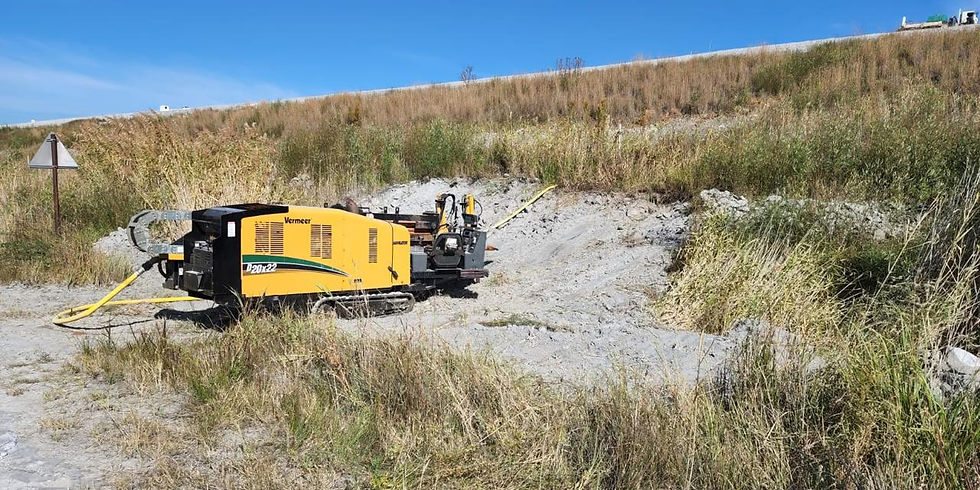
Horizontal directional drilling usually requires a planned entry point and exit point.
These points are important because they affect the bore path, drill angle, pipe pulling, pit preparation, working space and overall site layout.
Before requesting a quote, it helps to identify:
- Where the drill should enter the ground
- Where the drill should exit
- Whether there is enough space for the drill rig
- Whether there is enough space to lay down or pull the pipe
- Whether entry and exit pits can be prepared
- Whether there are any obstructions in the planned route
Entry and exit pits are an important part of site preparation. In most cases, these pits need to be prepared before drilling starts, and the responsibility for civil preparation should be clearly agreed before mobilisation.
5. Drawings, Wayleaves and Existing Services
One of the most important parts of any underground drilling project is understanding what is already below the surface.
Before drilling starts, the project team should identify existing underground services as far as reasonably possible. This may include water pipes, sewer lines, electrical cables, fibre lines, stormwater infrastructure, gas lines or other services belonging to the client, municipality, utility provider or third party.
To assist with planning, please provide any of the available:
- Wayleaves
- Service drawings
- Route layouts
- Construction drawings
- As-built drawings
- Site plans
- Tender drawings
- Known service information
Wayleaves and service information help reduce the risk of damaging existing underground infrastructure, causing delays, creating safety risks or affecting nearby services.
If drawings are incomplete or uncertain, this should be communicated upfront so the project risk can be considered.
6. Ground Conditions and Site Risks
Ground conditions can have a significant impact on directional drilling.
If you have any information about the ground conditions on site, please share it. This may include whether the area is known for rock, clay, sand, loose material, fill, waterlogged ground or previous excavation.
Other site risks may include:
- Existing underground services
- Traffic or public access
- Restricted working hours
- Nearby buildings or structures
- Steep or uneven ground
- Limited access for equipment
- Overhead power lines
- Environmental or water-related concerns
- Security or site induction requirements
Even if this information is not complete, any known site risks should be shared during the quoting stage. Early information helps us plan more realistically and avoid surprises once work begins.
7. Photos, Videos and Site Documents
Photos and videos are extremely useful when requesting a quote.
A few simple site photos can help us understand access, working space, surface conditions, possible entry and exit points, nearby structures and general site layout.
Helpful visuals include:
- Photos of the proposed drilling route
- Photos of the entry and exit areas
- Photos showing site access
- Photos of existing roads, walls, fences or structures
- Photos of where the pipe needs to connect
- Short videos walking the route
- Screenshots or marked-up route plans
If you are working from a tender document, project drawing or engineer’s specification, please include those documents with your enquiry.
The clearer the information, the easier it is to assess the project and provide a meaningful quote.
8. Timing, Payment Terms and Mobilisation Requirements
Project timing is also important.
Please let us know when the work needs to start, whether there are deadline requirements, and whether the project is linked to a larger construction programme.
Before mobilisation, certain items may need to be confirmed, including:
- Final scope of work
- Payment terms
- Purchase order or written approval
- Site readiness
- Entry and exit pit preparation
- Water availability for drilling
- Required safety documentation
- Site induction requirements
- Access arrangements
- Contact person on site
Where special payment terms are required, these should be discussed and approved before mobilisation. This helps ensure that both parties understand the commercial requirements before work starts.
Why Complete Information Matters
A directional drilling quote is not only based on distance. It is based on the full project picture.
Good information helps us assess:
- The right drilling method
- The correct equipment
- Site access and setup requirements
- Pipe pulling requirements
- Safety considerations
- Existing services and wayleave risks
- Labour and time requirements
- Mobilisation needs
- Potential project challenges
Providing the right information upfront helps reduce delays, avoid misunderstandings and support better project planning.
Speak to Kayeworx Drilling
If you are planning a directional drilling, HDPE pipe installation or specialist drilling project, Kayeworx Drilling can assist with practical project assessment and drilling support.
Send us your project location, pipe details, drawings, route information, site photos and any available specifications, and our team will help assess the best way forward.


Comments